I've been debating whether to post this recipe now or save it till next autumn, since sweet potatoes are usually associated with fall dishes. But it's a winter veggie and a recipe that we're still enjoying, and here in Wyoming and across much of the rest of North America, there is plenty of winter left. Besides, there are no guarantees in life, so why wait?
Am I therefore going to post it now? I yam indeed.

So, clear as a summer sky now? :-)
Here are a few of the differences between yams and sweet potatoes:
Sweet Potatoes:
Tubers (Morning Glory family)
Smooth skinSweet, moist flesh
Originated in tropical South America
Grown domestically (mostly in FL and CA)
Very high in Vitamin A (containing more than carrots), Vitamin C, Beta-Carotene and other nutrients
Yams:
Roots
Rough, scaly skin
Dry, starchy flesh
Originated in Africa ("yam" is thought to come from the West African word nyami, "to eat") and Asia
Imported to the US and Canada
Very low in Vitamin A, Vitamin C, Beta-Carotene and other nutrients
So the good news is that sweet potatoes are easy to find, deliciously high in health-promoting, disease-fighting nutrients, and now you won't get confused when I tell you that we use organic Garnet "yams" in this yummy Sweet Potatoes recipe. :-)
I've had this recipe for so long I don't remember where I first got it, but I've seen it (or close variations of it) on a few online recipe sites. (The No-oil Oil recipe comes via FatFree Vegan, since we never cook with added fats). My only experience with sweet potatoes till this recipe was my paternal grandmother's candied "yams" (see, there we go again!) at Thanksgiving, which I thought were vile. I was a veggie-loving kid and not at all a fussy eater, but found them too cloyingly sweet and much preferred my mother's mashed potatoes, butternut squash, and mashed rutabaga. It wasn't until trying this recipe about a decade ago that I was won over by sweet potatoes, and now also enjoy them just baked and eaten plain (BW even likes them cold that way). I say this in case any of you think you don't like sweet potatoes - I'd encourage you to try these. Especially if, like me, your dislike came from childhood and/or a dislike for candied "yams!"

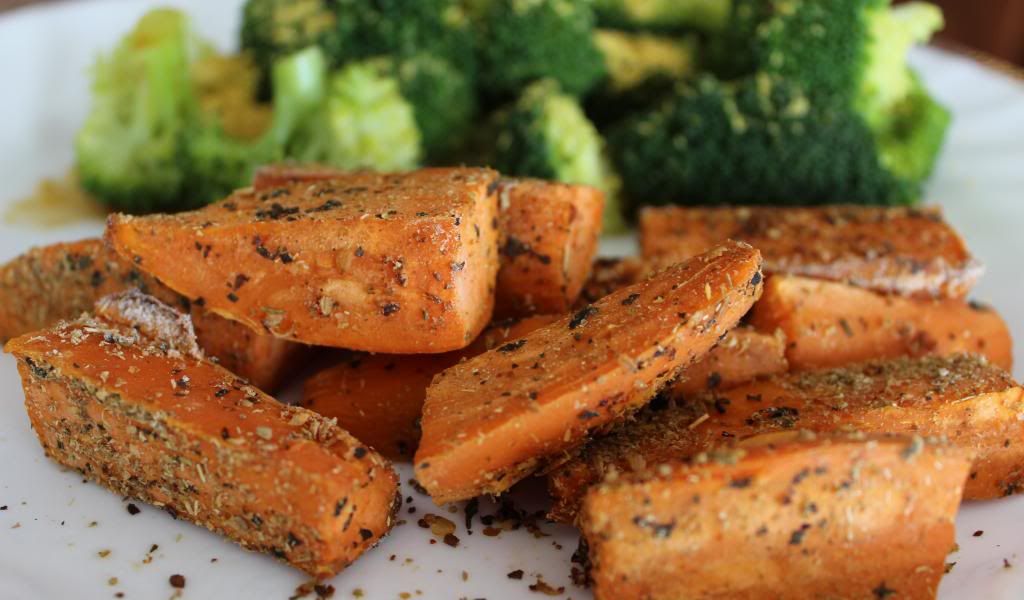
ROASTED SPICED SWEET POTATOES
~ 1 tsp coriander seeds
~ 1/2 tsp fennel seeds*
~ 1/2 tsp dried oregano
~ 1/2 tsp dried red pepper flakes
~ 1 tsp sea salt
~ 2 lbs medium sweet potatoes
~ 3 TBSP "No-Oil" Oil (recipe below)
Preheat oven to 425º F.
Coarsely grind coriander, fennel, oregano, red pepper flakes and salt in an electric coffee/spice grinder or with a mortar and pestle.
Cut potatoes lengthwise into 1-inch wedges.
Toss wedges with "no-oil" oil and spices in a large roasting pan or glass baking dish and roast in middle of oven for 20 minutes. Turn wedges over with a spatula and roast until tender and slightly golden, 15 to 20 minutes more.
NOTE: Grinding the spices yields more potent flavor, since the seeds retain flavorful oils that are lost in pre-ground spices. (You also get a wonderful dose of delicious aromatherapy!)
"NO-OIL" OIL
~ 1 cup water
~ 1 TBSP cornstarch
~ 1/2 tsp salt
~ 1 TBSP dried basil
Whiz in blender** the water, cornstarch and salt. Pour into saucepan, stir in basil. Heat to a boil. Cool. This will have the shine and consistency of oil to use in place of oil for those certain recipes. Great for glazing breads (like focaccia) before baking, or for coating veggies or potatoes so seasonings stick to them (like the roasted sweet 'taters above!) Store leftover "oil" in a lidded glass container in the refrigerator.
*I'm aware that a few of my regular visitors are card-carrying members of the "Fennel Loathers Club," there will be no convincing you to try this, and you are likely to leave disparaging remarks about fennel in the comments. What can I say except, "Can't please everybody!" :-)
**Don't literally whiz in your blender, please. That's nasty. ;-)